

Esta entrada también está disponible en:
 Español
  Français
  Deutsch
  Italiano
  Português
Last Updated on 13 July, 2026 by Daniel Silvente
The Salkantay Trek is one of the most spectacular routes to reach Machu Picchu. Over several days, it combines snow-capped mountains, Andean landscapes, jungle, changing weather, and some of the most impressive places in southern Peru, such as Humantay Lake and the Salkantay Pass.
But before booking, it’s normal to have questions: Is it a very difficult route? Is it better to choose the Salkantay Trek 4 days or the Salkantay Trek 5 days? What should you pack? What is the day-by-day experience really like? In this guide, we bring all that information together to help you decide if the Salkantay Trek to Machu Picchu is the right adventure for your trip.
We’ll also share our experience hiking the Salkantay Trek, along with practical tips to help you prepare for the route. And if, after reading, you’re ready to live this adventure, with Howlanders you can book your Salkantay Trek tour with everything organized to reach Machu Picchu in an unforgettable way.

Our Experience Hiking the Salkantay Trek
Day 1: Humantay Lake and First Impressions
Our Salkantay Trek experience started very early. We were picked up in Cusco at around 4:50 AM and, after about a 2-hour drive, we stopped for breakfast before continuing to the start of the route.
The first hike was a good introduction to the Salkantay route. The initial section was fairly manageable, with a short uphill stretch followed by a flatter path to the first campsite. It was a good first day to get used to the trekking pace, the group, and the mountain environment.
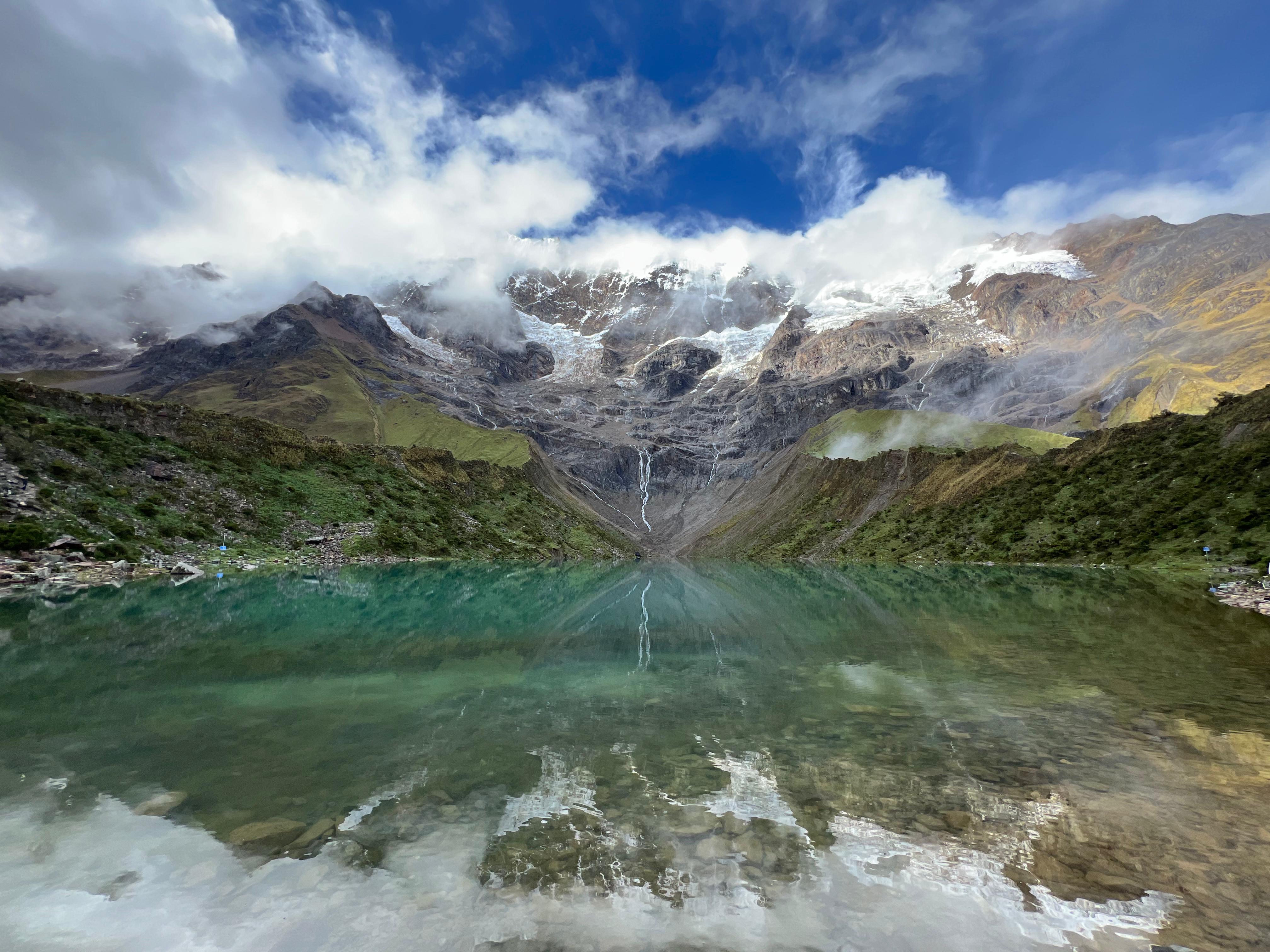
That same day, we also had the option to hike up to Humantay Lake. The hike takes about 1 hour of continuous uphill walking and feels demanding, especially on the first day. Still, the views of the lake and the surrounding mountains make the effort completely worth it.

Day 2: Salkantay Pass, the Most Demanding Section
The second day was, without a doubt, the hardest part of the entire Salkantay Trek. We woke up at around 4:30 AM with coca tea and started hiking at about 5:30 AM.
The main challenge of the day was reaching the Salkantay Pass, located at around 15,255 feet (4,650 meters) above sea level. The climb took us about 4 hours, with uneven sections, steady ascents, and parts known as “Inca flat,” terrain that looks flat but never really feels flat.
Reaching the highest point of the trek was one of the most special moments of the experience. There, we took part in a small Andean ritual with coca leaves in honor of Pachamama, a very symbolic pause after the effort of the climb.
After that, we had a long descent: about 2 hours down to lunch and around 3 more hours to the campsite. This section also requires attention, as there are steep and rocky areas that can become slippery if it has rained.

Day 3: Jungle, Coffee, and Hot Springs
From the third day on, the landscape changed completely. We woke up at around 5:00 AM and started hiking after breakfast, at about 6:15 AM.
This day felt much easier than the previous one. We walked for around 3 hours along flatter sections and downhill paths, leaving the high mountains behind and entering greener, more humid landscapes.
One of the most interesting moments of the day was stopping at a coffee and coca plantation. There, we learned about the cultivation process, roasted coffee, and tasted local dark chocolate. After two more demanding days, this part of the route felt much more relaxed and cultural.
In the afternoon, visiting the hot springs was one of the best ways to rest. After the effort of the previous days, spending some time in warm water helped us recover before the next stage.

Day 4: The Route to Aguas Calientes
On the fourth day, we continued toward Hidroeléctrica and Aguas Calientes. We woke up at around 5:00 AM and, depending on the itinerary and each traveler’s energy level, there was the option to do a 3-hour hike or take transportation for part of the route.
After that, from Hidroeléctrica, we walked along the train tracks to Aguas Calientes. This section takes about 3 hours and, although it is mostly flat, some parts require attention, especially near the river crossings.
Arriving in Aguas Calientes feels like the end of the trek and the gateway to Machu Picchu. That afternoon, we were able to rest before the visit the next day. As a practical tip, we recommend carrying a change of clothes in your daypack, since your main luggage may arrive later at the accommodation.

Day 5: Arrival at Machu Picchu
The final day was the big moment: visiting Machu Picchu. After several days hiking through mountains, valleys, jungle, and rural paths, reaching the Inca citadel feels incredibly special.
There are many ways to visit Machu Picchu: by train, with a guided tour, combined with the Sacred Valley, or through other routes such as the Inca Trail. But arriving after completing the Salkantay Trek to Machu Picchu adds a feeling of reward that is hard to explain.
If you want to take the bus from Aguas Calientes up to the entrance of Machu Picchu, we recommend buying your tickets the day before. This will help you avoid rushing in the morning and focus on enjoying the final part of the adventure.
If you want to live this experience without worrying about the organization, with Howlanders you can book your Salkantay Trek tour with a guide, accommodation, meals, transportation, and Machu Picchu visit included depending on the option you choose.

Is the Salkantay Trek Difficult?
The Salkantay Trek has a moderate to challenging difficulty level. It is not a technical route, and you do not need advanced mountain experience, but you should be in good physical condition, have some endurance, and be able to walk for several hours a day on consecutive days.
The difficulty also depends on the version you choose. While the Salkantay Trek 4 days option concentrates more effort into less time, so some stages are longer and more demanding, the Salkantay Trek 5 days option spreads the route out more evenly, divides some sections into two days, and is usually more comfortable for travelers who prefer a slightly slower pace.
In general, the most demanding day of the route is the one that crosses the Salkantay Pass, the highest point of the trek. Daily distance, elevation changes, mountain weather, and accumulated fatigue also play an important role. So, while you do not need to be an expert hiker, it is important to arrive prepared and spend a few days acclimatizing in Cusco before starting the trek.
Altitude and Salkantay Pass
Altitude is one of the main factors that affects the difficulty of the Salkantay Trek. The key point of the route is the Salkantay Pass, located at around 15,255 feet (4,650 meters) above sea level. Reaching it involves several hours of uphill hiking and is the biggest physical challenge of the route for most travelers.
If you are not used to hiking at high altitude, we recommend spending a few days in Cusco before starting the trek. Previous acclimatization helps your body adjust and can make a big difference, especially during the climb to the mountain pass.
During our experience, the day of the Salkantay Pass was the hardest of the entire route. The climb started very early, with coca tea before sunrise, and it took us several hours to reach the highest point. The effort is intense, but it is also one of the most memorable moments of the whole trek.

Daily Distance and Elevation Gain
Daily distance is another important factor. On the Salkantay Trek 4 days, the route usually includes longer stages, especially the section that connects Colpapampa with Aguas Calientes. This stage can feel tiring because it combines into one day a section that is split into two stages on the 5-day version.
On the Salkantay Trek 5 days, the first two days are usually similar to the 4-day version, but from the third day onward, the effort is spread out more evenly. Instead of reaching Aguas Calientes directly, the route allows you to move at a calmer pace, make intermediate stops, and enjoy the changing scenery between mountains, jungle, and valleys.
There are also premium versions of the Salkantay Trek tour, which may offer more comfortable accommodation or upgraded services. Even so, extra comfort at the end of each stage does not remove the physical challenge of the route: you will still be hiking several miles per day, with uphill sections, descents, and mountain terrain.

Weather and Temperature Changes
Weather also has a big impact on the difficulty of the Salkantay Trek. During the route, you can go from cold high-mountain areas to warmer, more humid jungle landscapes. This means you may need warm layers, a rain jacket, sun protection, and lighter clothing during the same trek.
If it rains, some downhill sections can become slippery, especially on steep or rocky parts of the trail. That is why good trekking footwear is essential, along with careful walking and preparation for sudden temperature changes.
In short, the Salkantay Trek difficulty should not scare you, but it should be taken seriously. If you have reasonable fitness, acclimatize in Cusco before the trek, and choose the version that best matches your pace, the route is completely achievable and can become one of the best experiences of your trip to Peru.
Salkantay Trek 4 Days or 5 Days: Which One Should You Choose?
The main difference between the Salkantay Trek 4 days and the Salkantay Trek 5 days is the pace. Both options share the first sections of the Salkantay route, including Humantay Lake and the Salkantay Pass, but the 4-day version covers more miles in less time, while the 5-day version spreads the effort out more evenly.
When to Choose the Salkantay Trek 4 Days
The Salkantay Trek 4 days is a good option if you have limited time in Peru and want to experience the Salkantay route without extending your trip too much. It is a more direct itinerary, with more concentrated hiking days, especially on the section toward Aguas Calientes.
It can be a good fit if you are in good physical condition, are used to walking for several hours a day, and want to reach Machu Picchu through a mountain route in less time.
Salkantay Trek 4 Days
| Day | Average Difficulty | Distance | Elevation Change |
|---|---|---|---|
| Day 1 | Moderate | 6.8 mi (11 km) | +2,887 ft (+880 m) |
| Day 2 | Challenging | 11.8 mi (19 km) | +2,346 ft (+715 m) |
| Day 3 | Challenging | 13.7 mi (22 km) | -2,625 ft (-800 m) |
| Day 4 | Moderate | 3.7 mi (6 km) | +1,312 ft (+400 m) |
When to Choose the Salkantay Trek 5 Days
The Salkantay Trek 5 days is the best option if you want to enjoy the route at a calmer pace. By dividing the stages more evenly, the effort feels more manageable and you have more time to rest, enjoy the scenery, and make stops such as the Cocalmayo hot springs, depending on the itinerary.
It is a good alternative if this is your first multi-day high-altitude trek, if you prefer a less intense pace, or if you want the journey to Machu Picchu to be a major part of the experience.
| Day | Average Difficulty | Distance | Elevation Change |
|---|---|---|---|
| Day 1 | Moderate | 6.8 mi (11 km) | +2,887 ft (+880 m) |
| Day 2 | Challenging | 11.8 mi (19 km) | +2,346 ft (+715 m) |
| Day 3 | Moderate | 7.5 mi (12 km) | -4,068 ft (-1,240 m) |
| Day 4 | Moderate | 7.5 mi (12 km) | +1,444 ft (+440 m) |
| Day 5 | Moderate | 3.7 mi (6 km) | +1,312 ft (+400 m) |

Salkantay Trek Packing List
During the Salkantay Trek, you will pass through very different landscapes and climates: cold mountain areas, sunny sections, possible rain, and more humid jungle zones. That is why packing well is essential if you want to hike comfortably without carrying unnecessary weight.
The idea is not to bring everything, but to bring what is useful for several days of trekking. Also, remember that during the route you will usually hike with a daypack, while your main luggage is transported separately depending on the tour you book.

Clothing and Footwear
For clothing, the most important thing is to dress in layers. This will help you adapt better to temperature changes along the Salkantay route.
Recommended clothing:
- Breathable T-shirts
- Fleece or mid-layer
- Warm jacket
- Rain jacket or waterproof shell
- Comfortable trekking pants
- Enough underwear
- Pajamas
- Thermal clothing, especially if traveling in the colder season
Footwear is also essential.
Recommended footwear:
- Comfortable trekking boots that are already broken in
- Waterproof boots, especially during the rainy season
- Sneakers or comfortable shoes for the campsite
- Technical or wool socks
Important accessories:
- Sun hat or cap
- Warm hat
- Gloves
- Neck gaiter or buff

These small accessories can make a big difference in the higher-altitude sections, especially near the Salkantay Pass.
Daypack and Accessories
In your daypack, you should carry everything you may need during the hike.
Daypack essentials:
- Water
- Snacks
- Sunscreen
- Insect repellent
- Rain jacket
- Warm layer
- Camera or phone
- Power bank
- Basic personal items
Other recommended accessories:
- Headlamp
- Trekking poles
- Reusable water bottle
- Quick-dry towel
- Small first-aid kit
Trekking poles and sleeping bags can often be rented before starting the route, so it is worth checking what your Salkantay Trek tour includes before packing.
For sleeping, it will depend on the type of tour you choose:
- On classic tours: you may need to bring or rent a sleeping bag.
- On premium tours: sleeping equipment is usually included or better prepared.

Documents, Cash, and Personal Basics
Although it is sometimes left for last, documentation is the most important thing.
Documents:
- Original passport or ID document
- Digital copy on your phone
- Copy saved in the cloud
Cash in Peruvian soles for:
- Hot showers
- Wi-Fi
- Drinks
- Tips
- Equipment rental
- Optional entrance fees, such as hot springs
Personal hygiene:
- Toothbrush and toothpaste
- Toilet paper
- Hand sanitizer
- Basic toiletries
- Sunscreen
- Insect repellent
Bring everything in small travel-size formats to avoid carrying unnecessary weight.

Tips to Prepare for the Salkantay Trek
Before starting the Salkantay Trek, we recommend spending at least a couple of days in Cusco to acclimatize to the altitude. This will help you especially during the climb to the Salkantay Pass, one of the most demanding moments of the route.
Another important tip is not to overpack. Bring functional, comfortable clothing that is easy to combine. On a multi-day trek, less weight usually means more comfort.
And above all, choose carefully between the Salkantay Trek 4 days and the Salkantay Trek 5 days.

Is the Salkantay Trek Worth It?
Yes, the Salkantay Trek is absolutely worth it if you are looking for a different, active, and exciting way to reach Machu Picchu. It is not the easiest route, but that is part of its charm: hiking through mountains, crossing the Salkantay Pass, watching the landscape change as you descend toward the jungle, and finishing the adventure at one of the wonders of the world.
It is a demanding experience, but also a very complete one. Combines nature, culture, physical effort, spectacular scenery, and the final reward of visiting Machu Picchu after several days on the trail.
If you want to experience this adventure with the logistics taken care of, with Howlanders you can book your Salkantay Trek tour and choose the option that best fits your trip. Compare the available routes, check what each tour includes, and get ready to enjoy one of the best trekking experiences in Peru.
