

Esta entrada también está disponible en:
 Español
  Français
  Deutsch
  Italiano
  Português
If you’re looking for an unforgettable adventure in Peru, the Salkantay Trek is one of the best options to reach Machu Picchu. It’s a challenging route, full of breathtaking landscapes, changing climates, and an incredible cultural experience. Below, I’ll share my day-by-day experience so you know exactly what to expect..
We arrived in Cusco a couple of days before by bus. We took the opportunity to get to know the city and enjoy the local gastronomy. Finally, the day before our trek we went to sleep early, as the pick up started very early the next day.

Day 1: Starting the Adventure and Humantay Lagoon
The day started early. At 4:50 am, the minibus picked us up at the hotel. After a two-hour drive, we stopped for breakfast (you can choose between American or continental), and then we continued for another hour to the trailhead.
The first part of the trek is relatively easy. There’s a small uphill section, followed by a flat path along an aqueduct leading to the first campsite.
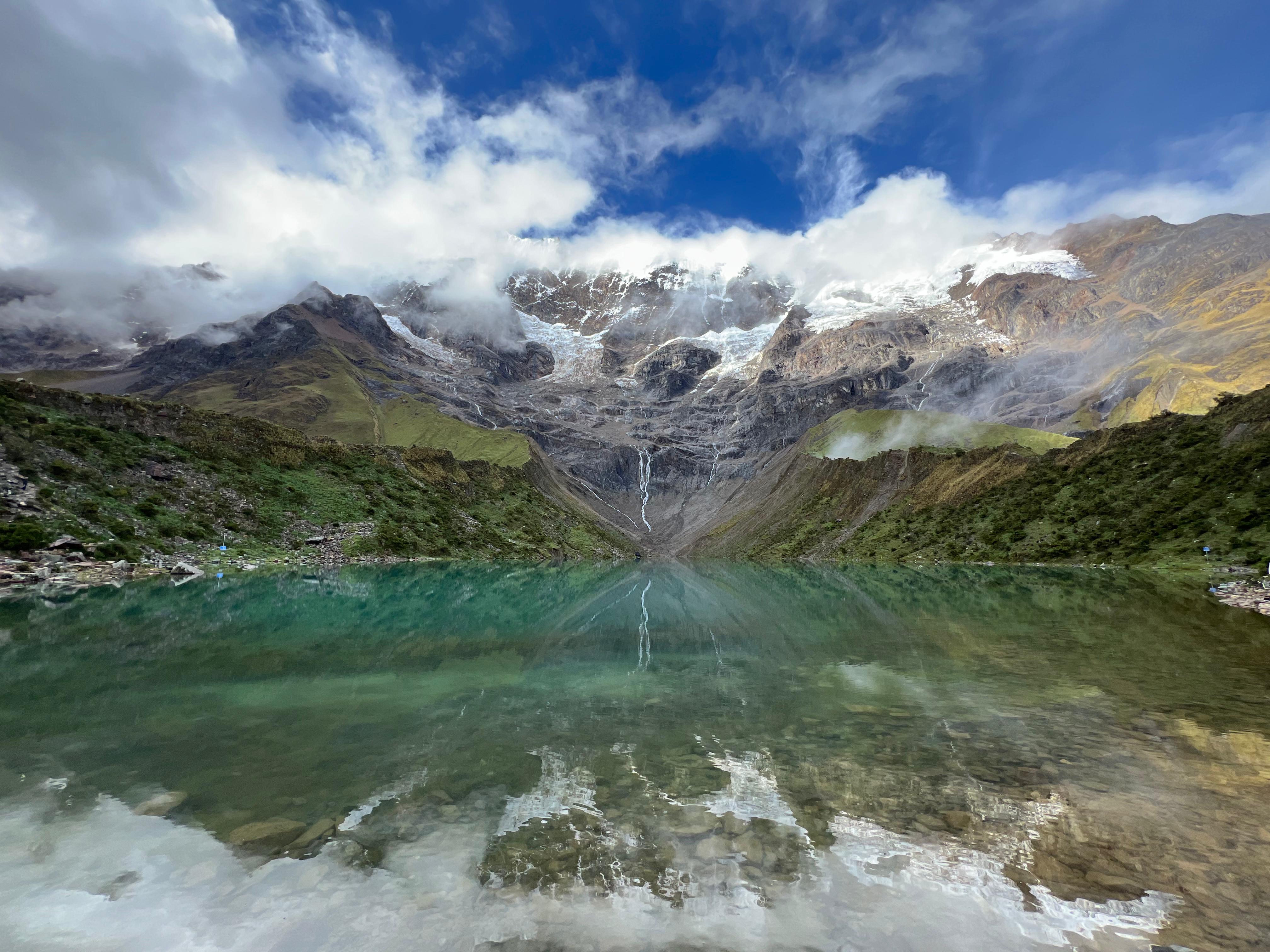
Optional: Climbing to Humantay Lagoon
If you’re looking for a challenge right from the start, you can hike up to Humantay Lagoon. This is the toughest climb of the entire trek, with a continuous one-hour ascent, but the spectacular view is absolutely worth it. If you’re low on energy, you can rent a horse for the climb.

In the afternoon, we had tea time at 5:00 pm with a briefing about the next day, followed by dinner at 6:00 pm.
The food was delicious and the portions were more than generous.
DAY 2: The Challenge of Salkantay Pass
We were woken up at 4:30 am with coca tea to help with the altitude. After breakfast, we started hiking at 5:30 am.Nos despertaron a las 4:30 am con un té de coca para ayudarnos con la altura. Después del desayuno, iniciamos la caminata a las 5:30 am.
The morning stretch is the most challenging of the trek: a four-hour ascent to Salkantay Pass (4,650 m). Unlike the previous day, this climb alternates between steep sections and “Inca flat” (uneven terrain).
If you prefer not to walk, you can rent a mule for 130 soles (a three-hour ride). While it’s easier, you’ll have to wait an hour at the campsite.
At the summit, we performed an Inca ritual with coca leaves in honor of Pachamama. The sense of accomplishment was indescribable.
The descent to the lunch spot took two hours, followed by another three-hour descent to the campsite, crossing steep and rocky terrain. Be careful—if it rains, it can get very slippery and dangerous.
This night’s campsite was the least comfortable of the entire trek, as there was little privacy.
Available services:
- Hot shower: 10 soles
- Wi-Fi: 10 soles
- Electricity: 5 soles
We ended the day with tea time and dinner, along with a briefing about the next day’s route.
Day 3: Nature, Coffee, and Hot Springs
This time, we were woken up at 5:00 am with coca tea. After breakfast, we started hiking at 6:15 am.
This day was much easier. We walked for three hours on mostly flat terrain, with some downhill sections along the road.
We had a special stop for a coffee and coca plantation tour, where we learned about the history of these crops in Peru, roasted and ground coffee, and tasted local dark chocolate.
Afterward, we took a van to the campsite, where we had lunch and said goodbye to those on the 4-day trek.
In the afternoon, we visited the hot springs (cost: 50 soles, including taxi and entrance fee). We spent two hours relaxing in the warm water and enjoying drinks from small local stands.
This was our favorite campsite— the most comfortable, with spacious rooms, electricity, Wi-Fi, and beds with pillows.
Day 4: Journey to Aguas Calientes
We woke up at 5:00 am (no coca tea this time).
On this day, we had two options:
- Taxi (30 soles): Avoids the hike and takes you directly to the restaurant where you wait for your group. You can rest in hammocks on the upper floor.
- Hiking (3 hours): This was my choice. We followed a steep trail along cliffs. If it rains, the descent can be tricky. At the top, you can visit some ruins and, if the weather is clear, catch a distant view of Machu Picchu.
From here, we took another van to Hidroelectrica, where we began a three-hour walk along the train tracks. Although mostly flat, some sections required crossing the river over wooden sleepers.

Finally, we arrived at Aguas Calientes, walked to the hotel, and had the rest of the afternoon free. The hotel was very comfortable.
Important: Your luggage arrives much later (around 6:00 pm), so I recommend carrying a change of clothes in your backpack.
At night, we met our new group for the Machu Picchu visit and had dinner at a restaurant with a set menu included.
Day 5: Machu Picchu, the Grand Finale
This day deserves a separate post, but let me tell you—it was the highlight of the entire trip.
There are many ways to reach Machu Picchu. You can take the train, book a guided tour that includes the Sacred Valley, or hike alternative routes like the Inca Trail. However, I can confidently say that visiting Machu Picchu after completing the Salkantay Trek was simply magical. Having the chance to explore the citadel after such a demanding journey made it even more special.
Tip: If you want to take the bus up, buy your tickets the day before at the designated office.

Tip: If you want to take the bus up, buy your tickets the day before at the designated office.
Is the Salkantay Trek Worth It?
Absolutely! While it’s a demanding route, every day offers stunning landscapes and unique experiences. The hike is tough, but reaching Machu Picchu this way makes it all worth it. If you’re looking for a challenging alternative to the Inca Trail, the Salkantay Trek is your best option.
I hope this guide helps you plan your adventure!
If you’ve already completed the Salkantay Trek, feel free to share your experience in the comments.
